Repeating a Skill or Changing the Conditions?
Repeating a skill or changing the conditions reveals different kinds of progress. Learn when to hold steady, vary one feature, or return to a familiar version.

The common mistake with repeating a skill or changing the conditions is assuming one approach must always be better. That can leave you polishing a familiar version without noticing its limits, or changing so much that you cannot tell what is difficult. Each approach answers a different question about learning.
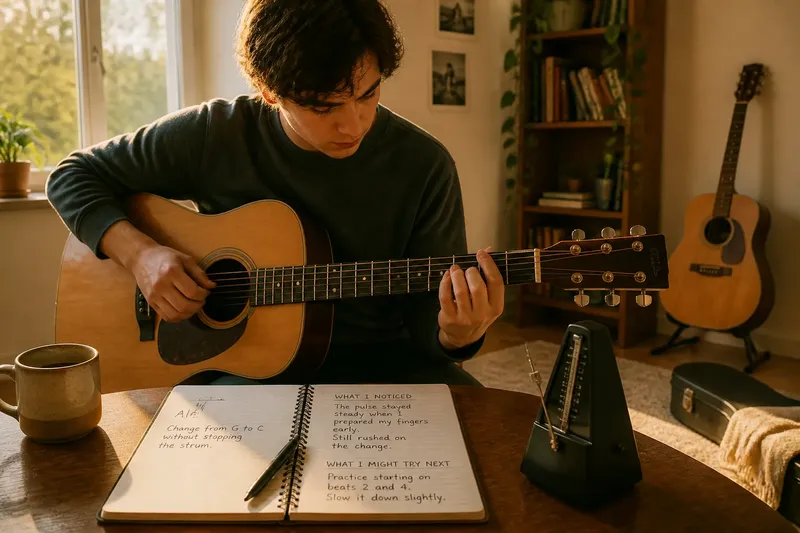
For a recreational guitarist, the distinction can be as simple as playing the same chord change several times, then trying it while standing. The aim is not to make practice harder by default. It is to understand what a change reveals about the skill.
What does repetition tell you about a skill?
Repetition keeps the task and its setting mostly steady. A guitarist might play the same two-chord change on the same instrument, at a comfortable tempo, while seated. With fewer moving parts, it is easier to notice whether a finger arrives late, brushes a neighboring string, or interrupts the beat.
This kind of practice is useful when the movement itself is still uncertain. It gives you room to attend to one part without also adapting to a new tempo, instrument, or position. A baker learning a basic knife cut, for instance, can use the same soft fruit and knife while focusing on keeping the slices consistent in shape.
But a smooth run in one setting says little about how the skill will respond elsewhere. A chord change that feels easy while seated may become awkward while standing. Repetition can refine a familiar version; it cannot answer every question about flexibility.
What can a small variation reveal?
Variation changes one condition while keeping the central skill recognizable. The guitarist could keep the chord pair and try a different familiar rhythm, or keep the rhythm and stand up. Changing one feature at a time makes it easier to connect an outcome with its likely cause.
A modest variation can show which parts of a skill depend on familiar cues. Perhaps the change works only at a slow pace, or only when one chord comes first. Treat that as information about the conditions, not a verdict on your ability.
Think of a kitchen drawer: if the spoons are moved, finding one takes more attention. The drawer is still a drawer, but the changed arrangement reveals whether you remember the usual location or can adapt your search.
How do you choose between repeating and varying?
Choose based on what you need to understand. If the basic action is unclear, keep the conditions steady and attend to the movement. If the familiar version feels settled, change one condition to see whether the skill still works.
- Notice a late finger: If the same finger repeatedly arrives after the beat, keep the chord pair and tempo steady; if it arrives in time, try a modest variation such as standing.
- Hear a clean chord: If the chord rings clearly while seated, keep the same chord change and test a familiar standing position; if it sounds muted, return to sitting and focus on finger placement.
- Lose the beat: If a new rhythm makes the pulse hard to follow, return to the original rhythm; if the pulse remains clear, keep the changed rhythm for another attempt.
- Feel the movement change: If a new instrument makes the hand position unfamiliar, use the familiar instrument again; if the movement remains recognizable, continue with the new instrument.
- Cannot identify the source of trouble: If several conditions changed at once, restore the familiar setup and change only one feature next time; if one feature clearly caused the difficulty, work with that feature alone.
- Find a manageable challenge: If one variation creates a specific, noticeable difficulty without erasing the chord change, repeat that variation; if the chord change disappears, make the variation gentler or return to the original setup.
Say you can change between G and C while seated, but the rhythm falters when you stand. Keep the G-to-C change and tempo the same, then try standing at a comfortable pace. If the beat remains steady but a finger misses its place, the posture is not the main obstacle; return to sitting and work on that finger movement before trying the standing version again. If the beat itself becomes hard to maintain, use the seated version as a reference and try standing later with a simpler rhythm. The observable result helps you choose between working on the chord movement and adapting to posture.
How much should you change at once?
Change one meaningful feature and leave the rest alone. A language learner might answer the same kind of familiar question using a new topic, rather than changing the topic, speaking speed, conversation partner, and vocabulary all together. If the answer becomes difficult, one change gives you a clearer clue about what needs attention.
Useful features to vary include tempo, sequence, position, prompt, or material. Keep the purpose of the skill recognizable: changing the tempo of a familiar dance turn is easier to interpret than adding unfamiliar steps and new music at the same time.
What should you notice during practice?
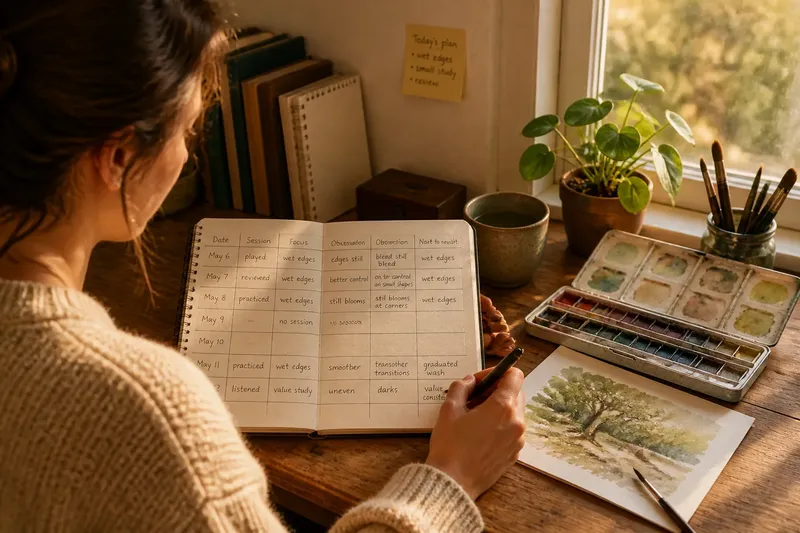
Choose an observable detail instead of judging an attempt only by whether it felt good. A guitarist can listen for an even beat or watch whether the fingers arrive in order. A sketcher can check whether a line follows the intended curve.
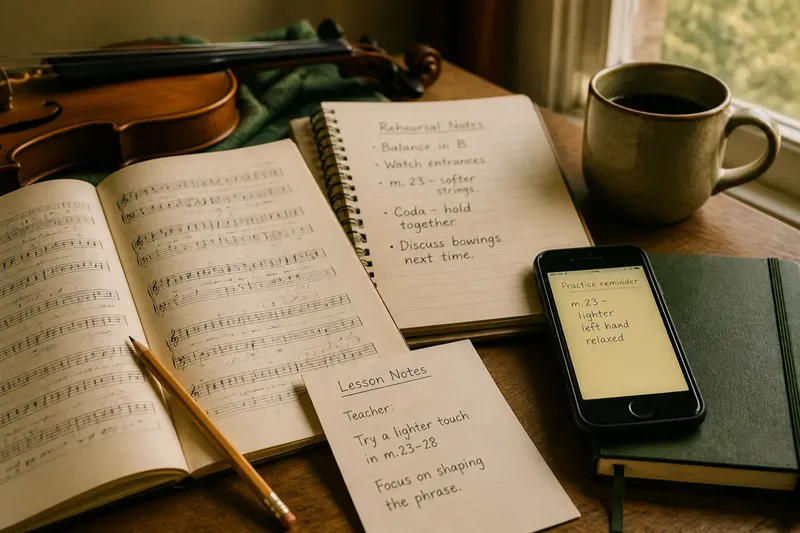
A teacher, practice partner, recording, or metronome can help with a specific question. For example, a recording may make an uneven rhythm easier to hear. Focus on one cue at a time; several corrections can compete for your attention.
Separate the result from the condition. If a new rhythm makes a chord transition rough, note that the rhythm changed and the transition became less clean. That observation does not mean the skill is gone. It tells you which feature to reconsider.
When should you return to the familiar version?
Go back when a variation makes the intended skill hard to judge. If a faster tempo causes you to lose the beat entirely, you may be practicing tempo control rather than the chord change. If a different drawing tool changes the feel so much that you cannot assess your usual line control, pick up the familiar pencil again.
Returning gives you a clear point of comparison. From there, repeat the familiar version, try a gentler change, or leave the variation for another practice session. Let what you observed guide the choice instead of assuming every attempt should be harder than the last.
What do learners ask about repeating a skill or changing the conditions?
Does repeating a skill make it more reliable?
Repetition gives you a steady setting in which to refine an action and notice recurring snags. It does not show by itself whether the skill will hold up under different conditions.
Can variation help a skill transfer?
Changing one familiar condition can show whether you can use the skill beyond its usual setup. Keep the task recognizable so you can tell what the variation affects.
Should you change the task after every attempt?
No. Repeating the same version gives you a point of comparison, while changing too often can make the cause of a difficulty unclear. Vary a condition when you have a specific reason to do so.
What if the varied attempt goes worse?
Check what changed before drawing a broad conclusion. Repeat the familiar version, make the variation gentler, or focus on the part that became difficult.
Repeating a skill or changing the conditions works best when each choice has a distinct purpose: repetition helps you inspect the action, while variation tests its response to a new demand. A single clear observation is enough to decide whether to stay with the familiar version or make the next change.