From Rehearsal Rooms to Practice Logs
Practice logs began as shared rehearsal reminders and became personal learning records. See how their purpose shifted across settings and what each format serves.
The common mistake in telling the story of practice logs is to treat today’s personal notebook as if it were always the point. That narrows the history and hides what records first did in shared settings: preserve decisions people needed to act on together. The phrase practice log history is best understood as a change in purpose, not a single invention story.
What did rehearsal-room records do?
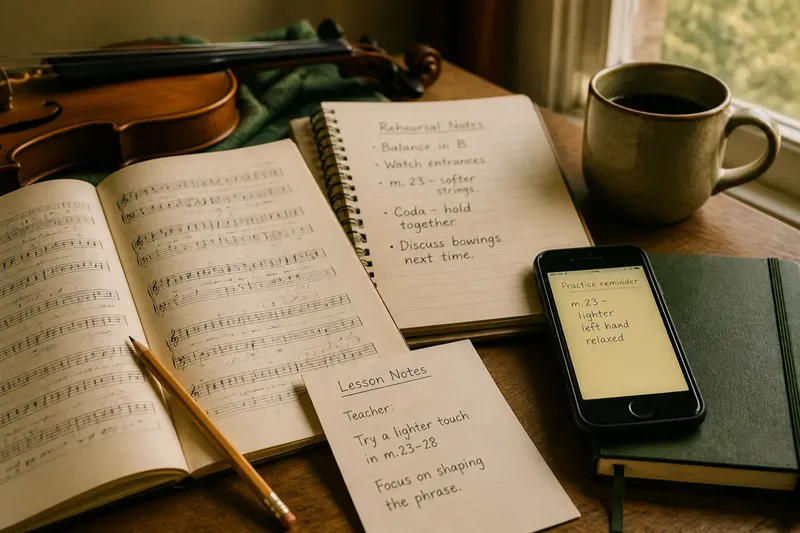
In an ensemble rehearsal, written marks can keep a shared choice visible after discussion moves on. A conductor’s notation in a score, a penciled cue beside a passage, or a note passed among players can help everyone return to the same point with the same instruction in mind.
These records were tied to the work itself. Sheet music carried markings close to the passage; a rehearsal note could identify a cue or a change to revisit. Their value came from being available where a group needed to coordinate, not from documenting every minute of practice.
How did records become personal?
As learners used records for their own work, the audience changed. A pianist might keep a fingering reminder, while a language learner might write down a phrase that was hard to recall. The note no longer had to communicate a shared rehearsal decision. It could simply help one person pick up a thread later.
There is no need to claim a single origin for that shift. Different learners and teachers had different reasons to write things down: keeping an instruction close, remembering a question, or making a routine easier to resume. The practice log took on a personal role alongside its use as a shared record.
What changed as records moved beyond the score?
When a record moved from a marked score or rehearsal note into a separate notebook, calendar, or phone note, its location changed too. The note could travel across sessions and settings, rather than remaining attached to one piece of music or one group’s immediate work.
That change brought a tradeoff. A separate record can hold a broader thread, but it may be less visible at the moment a learner needs a cue. A reminder written beside a passage is easy to connect to that passage; a phone note may be easier to carry but require searching or remembering where it was saved.
Think of the change like moving a bookmark from the page into a pocket list: the reminder becomes portable, but you must reconnect it to the right place. The format is not automatically better or worse; it serves a different relationship between the note and the activity.
Which format serves which kind of record?
Choose based on where the information needs to be found, rather than on which format looks most complete.
- Marked sheet music: If the reminder belongs to a specific passage, write it near that passage; if it concerns several pieces or sessions, use a separate record instead.
- A rehearsal notebook: If you need to keep shared cues or decisions together, use a notebook everyone can consult; if only one person needs the note, keep it in a personal record.
- A personal paper notebook: If you want a durable place beside your materials, use paper; if you often need the note away from your practice space, choose a format you can carry more easily.
- A phone note: If you need to capture a thought away from the instrument, save it on your phone; if finding the right note becomes difficult, organize entries by activity or use a paper record kept with the materials.
- A calendar: If the main need is remembering when a session is planned, use a calendar; if you need detailed observations tied to the work, keep those in a separate log.
- A teacher’s instruction: If the note records what a teacher asked you to try, preserve the instruction clearly; if you also want to record your own response, distinguish your observation from the teacher’s words.
How can you trace the shift from shared to personal records?
Were rehearsal notes the same as personal practice logs?
Not necessarily. Rehearsal notes often served coordination among players, while a personal log could preserve one learner’s questions or reminders. Both recorded information, but they addressed different audiences.
Did phone notes replace paper practice logs?
They offer another place to keep a record, rather than a universal replacement for paper. A phone note is portable, while paper may remain easier to see beside sheet music or other materials.
Why did learners keep records outside the score?
A separate record can bring together notes that do not belong to one passage, such as a question carried across sessions. A score remains useful when the reminder needs to stay beside a specific musical location.
What does practice log history help explain today?
It helps explain why a log can serve more than one purpose: coordinating a group, preserving instruction, or supporting an individual learner’s continuity. Choosing a format starts with deciding which of those jobs matters now.
What does the history suggest about choosing a log?
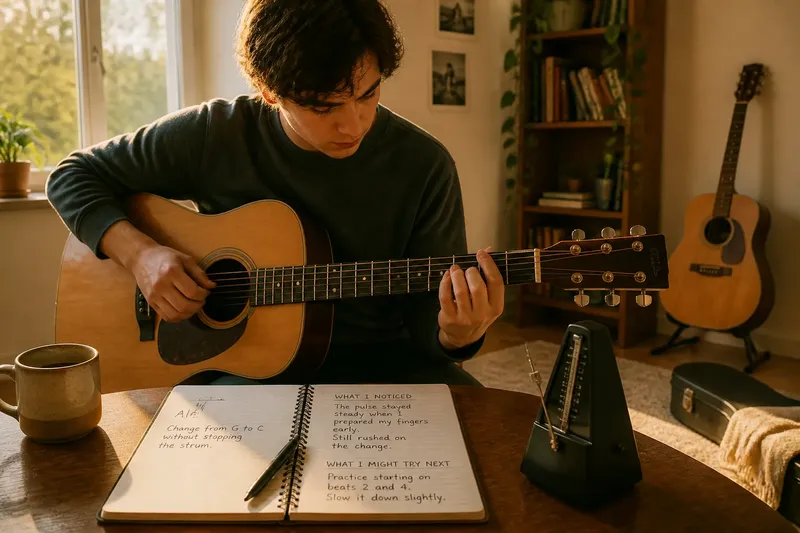
Say a recreational guitarist has a penciled chord-change cue in sheet music, a teacher’s instruction on a lesson handout, and a reminder saved in a phone note. The guitarist wants to revisit the same passage at home. They keep the chord cue beside the passage, place the teacher’s instruction in the lesson handout, and move the phone reminder into a note titled with the piece’s name. The resulting arrangement keeps the local cue with the music and makes the portable reminder easier to find, while the handout preserves whose instruction it was.
Practice log history points to a useful distinction: records work best when their location and audience match their job. A shared rehearsal decision belongs where collaborators can find it; a personal reminder belongs where its writer will return to it. That simple choice keeps a record connected to the work it was meant to support.