How to Make a Progress Chart Useful After a Missed Practice Session
A progress chart can track practice without turning a missed session into failure. Learn what to record and how to make the chart useful when you return.

The common mistake with a progress chart is treating a blank day as proof that learning has stopped. A broken practice streak can make that mistake feel official, even though the chart records only what you did on certain days. A better progress chart helps you see what to revisit when you return.
For recreational learners, practice has to fit around work, family, weather, and energy. A chart can remind you when you practiced and what you were working on. Its design becomes a problem when a blank space draws more attention than the skill the chart is supposed to support.
What does a practice streak actually tell you?
A streak usually marks practice on consecutive days or completion of planned sessions. That can show a pattern of participation. It cannot show whether you understood feedback, improved a technique, or used your attention well.
Imagine a piano learner who marks a day complete after playing a familiar piece once. The mark says a session happened, but not whether the learner noticed a recurring stumble. On another day, the learner listens to a recording, spots an uneven phrase, and writes down what to revisit. A chart that counts only playing may leave that useful review invisible.
This distinction applies to drawing, language learning, recreational sports, and other skills. A calendar is like a kitchen timer: it tracks time, but it cannot tell you how the soup tastes. Keep the streak if it helps you remember to practice; do not treat it as a full account of learning.
What can a progress chart record?
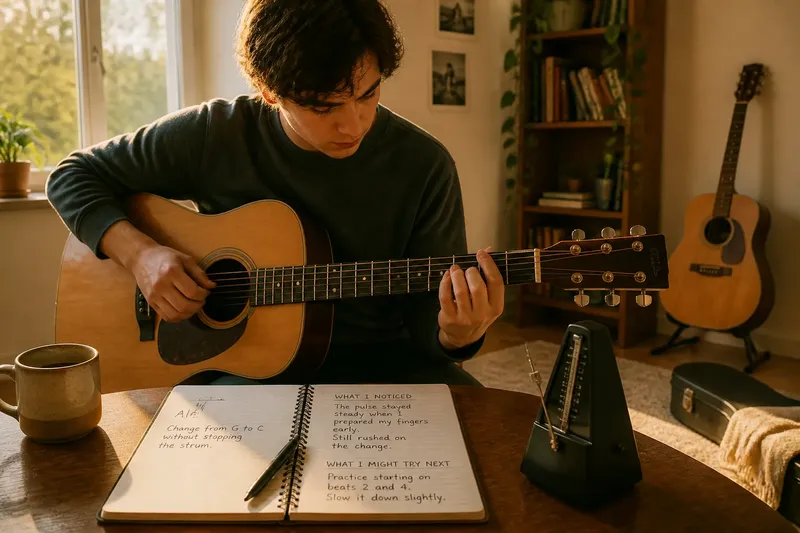
Choose details that help you interpret the record later. A few words are usually enough; the chart does not need to become another assignment. For each entry, consider what you did, what you focused on, and what you noticed.
- Session: If you practiced, reviewed a recording, or observed a demonstration, record which one; if nothing related to practice happened, leave the date blank or mark it “no session.”
- Focus: If you worked on a specific skill, name it; if the session had no clear focus, write “general practice” rather than inventing one.
- Observation: If you noticed a difficulty or change, note it briefly; if nothing stood out, leave the observation field empty.
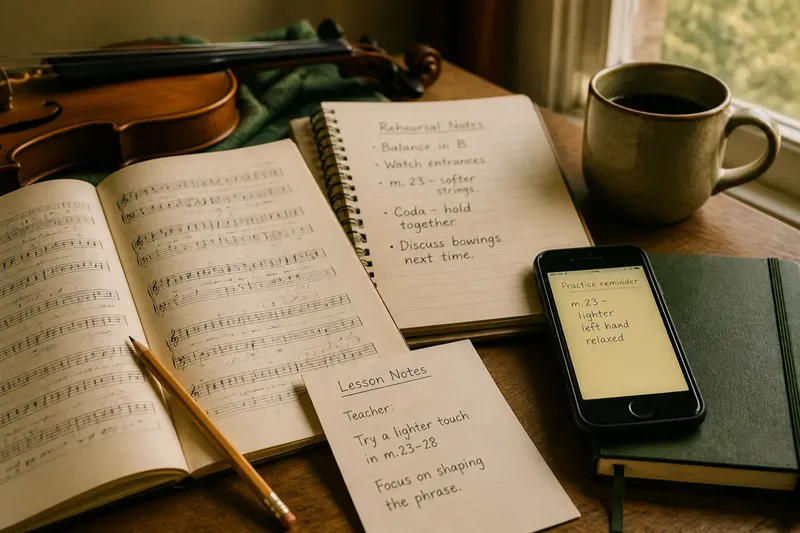
- Feedback: If a teacher, coach, recording, or your own review gave you a useful cue, write the cue; if not, do not add a placeholder.
- Next point to revisit: If an observation suggests a clear follow-up, write that skill; if it does not, choose the next session’s focus when you are ready.
- Pause: If a planned session did not happen, leave the square blank or mark “no session”; if a chain of blank squares makes the chart hard to use, remove the connecting line or switch to a weekly view.
These choices keep the record descriptive. If you use a paper calendar, write short notes beside the dates. In a notes app, use the same few labels each time so entries are easy to scan. If the chart is part of a class or coaching program, follow the teacher’s or coach’s instructions for shared records.
How can you record a missed session?
Use wording that describes what happened rather than judging yourself. “No practice today” is clear. “I fell off” adds a story about personal weakness. You do not need to explain every pause or promise to make up for it.
Say you are learning watercolor and miss a planned evening because a family commitment runs late. Your chart has three recent entries about controlling wet edges, followed by a blank date. When you return, read the last note and try a small study of wet edges; if the technique still feels difficult, make it the focus again, and if it feels more manageable, choose another skill. The chart records the interruption and gives you a concrete point of reference without claiming that the blank date erased your earlier work.
If you feel pressure to practice just to preserve a chain, change the chart’s format rather than forcing an entry. You could record sessions without connecting consecutive dates, or keep a weekly page with space for a focus and observation. The right choice is the one that lets you read the record without making ordinary interruptions feel like a judgment.
What do learners ask about a missed practice session?
Does one missed session erase what I learned?
A blank date alone cannot tell you whether a skill changed. Use your next practice or review to see what feels familiar and what needs attention.
Should I make up a session I missed?
You do not need to add a second session just to balance the chart. Return with a manageable plan that fits your current focus and schedule.
Is a daily streak useful for every learner?
A daily streak may suit someone who likes a frequent reminder. If it makes your chart harder to use or pressures you to fill squares, track sessions without maintaining a chain.
What if the chart makes me feel guilty?
Look at whether its marks help you remember what to practice or notice. If the chain mainly draws attention to blank dates, remove it or use a simpler record of sessions and skill focus.
How can you tell if the chart format is the problem?
Check what the chart asks you to do and what you actually use it for. If it is meant to remind you to practice, session dates may be enough. If you want to remember what happened in practice, add a short focus or observation. Do not add detail simply because there is room for it.
Make one change at a time so you can tell whether the new format is easier to read. For example, if connecting lines make a pause look like a broken achievement, remove the lines but keep the dates. If blank squares still dominate the page, move to a weekly record. If short notes feel useful, retain them; if they become a chore, remove that field.
A progress chart for missed practice sessions works best when its marks answer a practical question: what happened, and what might I want to revisit? A blank date needs no apology. Keep the record simple enough to use, and let its next entry describe the practice you actually do.